Taste as You Go: Kitchen Wisdom from Orvilda
Taste as You Go
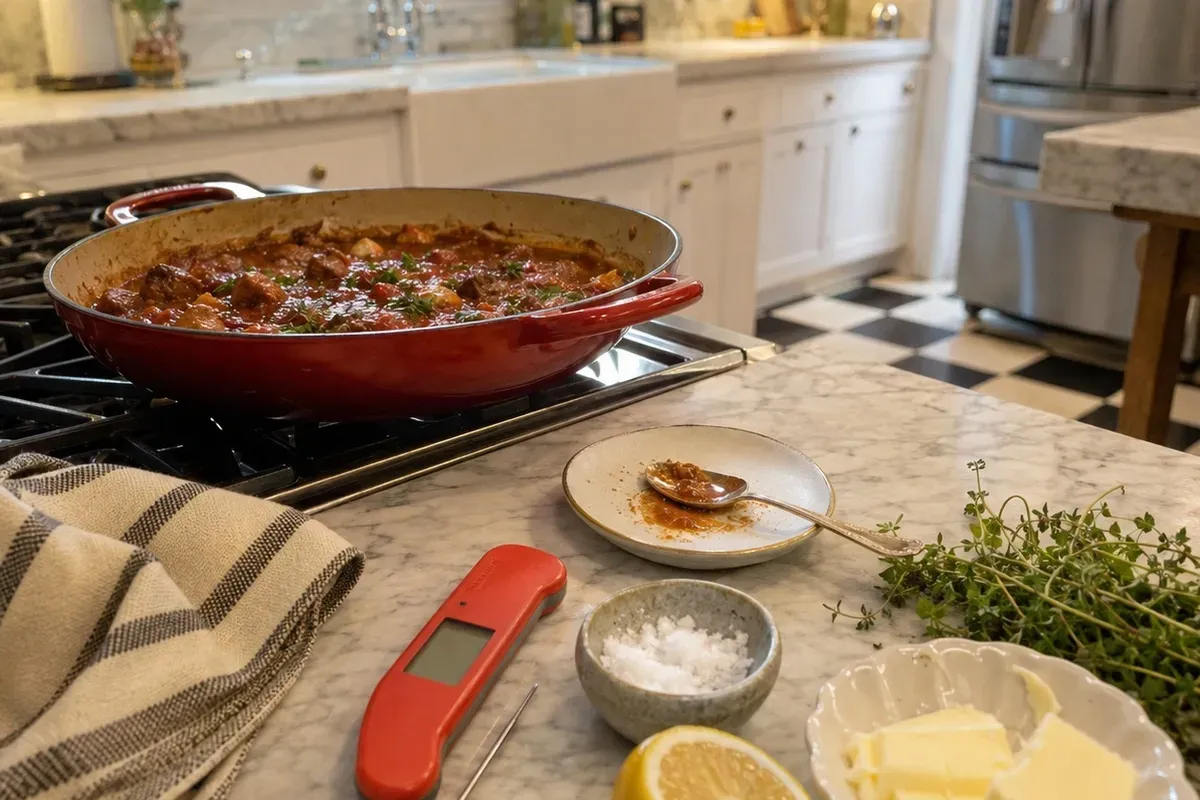
Add a little salt when it needs waking up, a squeeze of lemon when it feels heavy, or a touch more butter when it needs comfort.
That is how a recipe starts to feel like yours.
I think tasting as you go is one of the biggest differences between following a recipe and really learning how to cook. A recipe can give you the amounts, the order, and the timing, but it cannot always know your ingredients. It cannot know if your lemons are extra tart, your broth is saltier than mine, your tomatoes are sweeter, or your sauce needs just a little more time.
That part is up to you.
And honestly, that is the good part.
Tasting teaches you. It tells you when something is flat, too sharp, too heavy, or almost there. It helps you learn what salt actually does, what lemon can brighten, what butter can soften, and what time can fix better than another handful of ingredients.
I do not mean tasting once at the end and hoping for the best. I mean tasting along the way, quietly and thoughtfully. Taste after the onions soften. Taste after the broth goes in. Taste after the sauce has simmered. Taste before you add more salt. Taste again after the dish has rested.
This is where home cooking becomes personal.
At Orvilda, I love the old kitchen wisdom — the kind that came from watching, smelling, stirring, and knowing. But I also believe in using what helps us now. I taste as I go, and I also use my ThermoWorks thermometer to check most everything when doneness matters. Taste tells me about flavor. Temperature tells me when something is safely cooked.
Both matter.
Because good cooking is not just about getting through the steps.
It is about noticing what the food needs next.
1. Salt Wakes Food Up
Salt is often the first thing to check when food tastes flat.
Not salty. Flat.
There is a difference.
A soup can have good ingredients and still taste dull. A sauce can have garlic, herbs, tomatoes, and broth, but still feel like it has not quite opened up yet. A little salt can bring the flavors forward and make everything taste more like itself.
What to taste for:
If the food tastes dull, muted, or unfinished, it may need a little salt.
A good updated tip:
Add salt in small amounts. Stir well, give it a moment, then taste again. Do not add salt three times before the first pinch has had a chance to move through the dish.
Why this matters:
Serious Eats explains that “season to taste” is about learning to adjust with salt, acid, fat, and sweetness instead of guessing at the end. Salt does more than make food salty — it helps bring out flavor and balance.
Kim’s kitchen note:
When food tastes sleepy, salt can wake it up.
2. Lemon Brightens What Feels Heavy
Sometimes food does not need more salt.
Sometimes it needs brightness.
A creamy sauce, rich soup, buttery pasta, or slow-cooked meat can start to feel a little heavy. A squeeze of lemon or a splash of vinegar can lift it. It does not have to taste lemony. It just needs enough to make the dish feel alive again.
What to taste for:
If a dish feels heavy, dull, too rich, or a little tired, try acid before adding more seasoning.
A good updated tip:
Add lemon juice or vinegar a little at a time. Stir and taste. You are not trying to make it sour. You are trying to bring balance.
Why this matters:
Samin Nosrat’s teaching inSalt, Fat, Acid, Heatcenters on learning how salt, fat, acid, and heat shape good cooking; her approach emphasizes understanding these core elements rather than only memorizing recipes.Serious Eats also notes that acids can affect how we perceive saltiness and overall flavor balance.
Kim’s kitchen note:
Lemon is one of my favorite little fixes. It can make a dish feel lighter without changing who it is.
3. Butter Softens the Edges
Butter is not just for richness.
Sometimes butter rounds things out. It can soften acidity, smooth a sauce, calm down sharp flavors, and make a dish feel more comforting. This is why a little butter at the end of a sauce can make it taste more finished.
What to taste for:
If a sauce tastes sharp, thin, or unfinished, it may need a little fat to round it out.
A good updated tip:
Add a small pat of butter at the end, off heat or on very low heat, and stir until it melts in. Then taste again before adding anything else.
Why this matters:
Flavor balance is not only about seasoning. Fat changes texture and mouthfeel, and Serious Eats notes that fat can affect how we perceive salt in food, which is one reason tasting again after adding butter or cream matters.
Kim’s kitchen note:
Butter has a way of making food feel like it came from home.
4. Taste Before You Add More
This sounds simple, but it is one of the best habits you can build.
Do not keep adding ingredients just because something tastes off. Stop and ask what kind of “off” it is.
Is it flat?
Too heavy?
Too sharp?
Too salty?
Too sweet?
Too thin?
Not cooked "married" together yet?
Those are all different problems, and they need different answers.
What to do:
Taste first. Then adjust.
A good updated tip:
Use a clean spoon each time you taste, especially if you are cooking for other people. Taste small, adjust small, and give the dish a moment before deciding again.
Kim’s kitchen note:
A little pause before adding more can save the whole pot.
5. Give the Dish Time Before You Judge It
Sometimes food tastes unfinished because it is unfinished.
A sauce may need ten more minutes. A soup may need to simmer. A casserole may need to rest. A dressing may need a little time for the salt and acid to settle into everything.
This is why tasting as you go matters. You start learning the difference between “this needs more seasoning” and “this needs more time.”
What to taste for:
If the flavors feel separate, harsh, or not quite blended, the dish may need time instead of more ingredients.
A good updated tip:
Let sauces and soups sit for a few minutes before final seasoning. Taste once while cooking, then again after resting. You may find that the dish changes on its own.
Why this matters:
Serious Eats has tested how stews and soups can shift after resting, noting that flavor differences may be subtle but real enough to matter in certain dishes.
Kim’s kitchen note:
Sometimes the best thing you can add is a few more minutes.
6. Learn the Difference Between Seasoning and Fixing
There is a difference between building flavor and rescuing flavor.
Building flavor happens slowly — seasoning onions, tasting broth, adjusting sauce, letting things simmer.
Fixing flavor happens when you wait until the end and realize the whole dish needs help.
We have all done it. I still do it sometimes. But tasting as you go gives you more chances to guide the food before it gets too far away from you.
What to do:
Taste at natural stopping points:
after aromatics soften
after liquid is added
halfway through simmering
before thickening
before serving
after resting
Kim’s kitchen note:
Tasting along the way is like checking in with the recipe before it gets lost.
7. Taste Safely When Cooking Meat, Poultry, or Eggs
Taste is important, but safety comes first.
Do not taste anything with raw chicken, raw pork, raw eggs, or uncooked meat juices. If I am making meatloaf, meatballs, sausage mixture, or stuffing, I do not taste it raw. I cook a tiny spoonful in a skillet first, then taste and adjust.
What to do:
For raw meat mixtures, cook a small sample before tasting.
A good updated tip:
Use taste for seasoning, and use a thermometer for doneness. I use my ThermoWorks thermometer to check most everything because flavor and safety are two different things.
Why this matters:
FoodSafety.gov lists safe minimum internal temperatures, including 165°F for poultry, casseroles, and leftovers, 160°F for ground meats, and 145°F with rest time for whole cuts of beef, pork, veal, and lamb.ThermoWorks also provides cooking temperature guidance and notes that temperature matters for doneness and carryover cooking.
Kim’s kitchen note:
Taste tells you flavor. Temperature tells you safe.
8. Let Your Own Kitchen Teach You
Your stove is not exactly like mine. Your pans are different. Your salt may be finer. Your lemons may be stronger. Your broth may be saltier. Your oven may run hot. That is why tasting as you go is so important.
It makes the recipe fit your kitchen.
This is where confidence grows. Not because you never make mistakes, but because you learn how to correct them. A little salt. A little lemon. A little butter. A little time.
Small adjustments make a big difference.
Kim’s kitchen note:
The more you taste, the more you trust yourself.